
Spray Foam Insulation in College Park, GA
In College Park the complaint is usually the floor. Cold boards in January, a draft you can feel at ankle height, a musty edge to the air after a week of rain. And over the top of all of it, the planes.
Free Insulation Estimate
Family ownedOperating since 2010
Spray foam specialistsNot a general insulation reseller
Serving College ParkNorth Georgia
Lawrenceville based1891 Prospect Church Road
This is pre-1940 bungalow country. These houses were built on raised crawlspaces, with real plaster, real heart pine, and no plan whatsoever for how they would be heated and cooled a century later. They have earned their insulation problems honestly, and they reward careful work more than almost any other housing stock we touch. They also punish guesswork, because almost none of them are still the house that was originally built.
A College Park bungalow can have the boundary in three places at once.
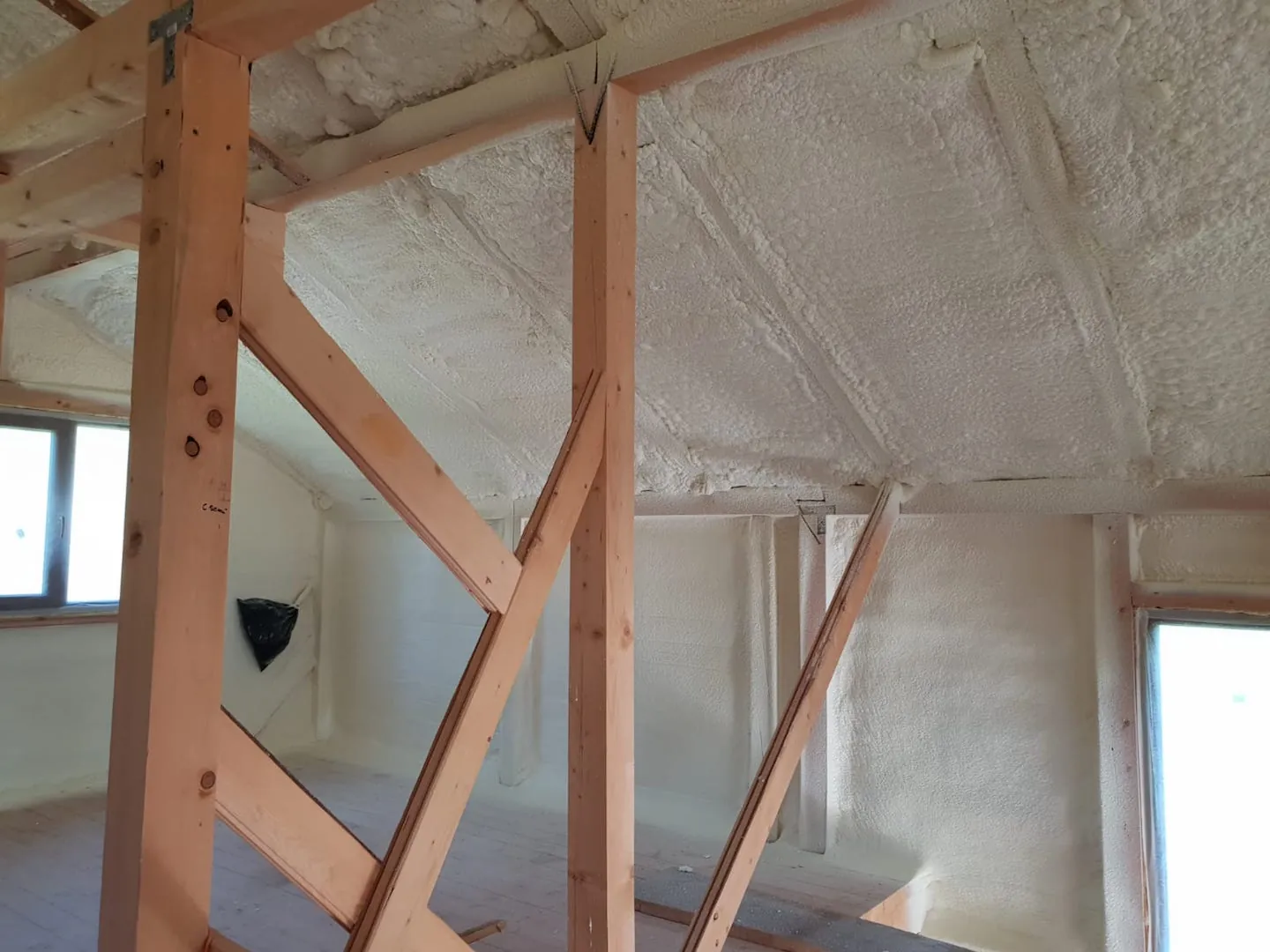
Decades of additions are the reason. The original house was built one way. A rear addition went on in one decade, a side room or enclosed porch in another, and maybe a second story or a converted attic after that. Each builder insulated to their own standard, or not at all, and each tied into the old work differently. The result is a house where the thermal boundary, the line between conditioned and unconditioned space, wanders. It runs at the ceiling in one room, at a kneewall in the next, and through a floor system somewhere else. Heating one of these houses means conditioning spaces you did not intend to condition and losing air through gaps you did not know existed. The first job in a College Park bungalow is not spraying. It is tracing that boundary through every addition and deciding where it ought to run, as one continuous line, before any material goes in.
That tracing happens in the crawlspace and the attic, not from the driveway. We look at how each addition was floored and roofed, where the old exterior walls still live inside the current house, and where the air is actually moving. Only then does the scope make sense, and only then does the quote mean anything.
On a renovation, the trades settle before the foam.
Many College Park bungalows are mid-renovation when we first see them, and the order of operations matters more than the product. Spray foam cures around whatever it touches, permanently. If the electrician still has circuits to run, or the plumber is moving a line through the crawlspace, that work comes first, because foam sprayed too early gets cut back out and the boundary goes with it. The right sequence is mechanical changes, then insulation, then the finishes that close everything in. The reward for waiting is real. An opened-up bungalow with walls and floors exposed is the easiest and most accurate version of this job, and the scope reflects that nothing is hidden. Tell us where your project stands and we will tell you honestly whether it is time yet.
The raised crawlspace sets the tone for the whole house.
Under almost every one of these bungalows is a vented crawlspace, and it is connected to the living space above by a century of penetrations: plumbing runs, old wiring, duct chases, and floor boards that have shrunk and gapped over time. Whatever the crawlspace air is doing, the first floor is doing a version of it. Humid summer air comes up and brings the musty smell with it. Cold winter air sits under the floor and the floor stays cold no matter what the thermostat says. Sealing and insulating the crawlspace at its perimeter, with a proper ground vapor layer, changes the character of the whole house. The floors warm up. The drafts at ankle height stop. The smell that owners assumed was just what old houses smell like usually turns out to be the crawlspace, and it usually leaves with the vents.
The rim, the plumbing holes and the ground do most of the damage.
Three details decide whether a crawlspace job actually works. The rim, where the floor framing sits on the foundation wall, was rarely sealed on these houses and leaks around the entire perimeter. The plumbing penetrations, where supply and drain lines pass through the floor, are open holes into the space below, and a century of repairs has added more. And the ground itself keeps evaporating moisture into the crawlspace whether it rains or not, which is why the ground vapor layer matters as much as the foam on the walls. A crawlspace scope that names the walls but skips the rim, the penetrations or the ground is doing most of the job and leaving the worst of it. Ours name all three, line by line.
This close to the airport, sound is a real reason people call.
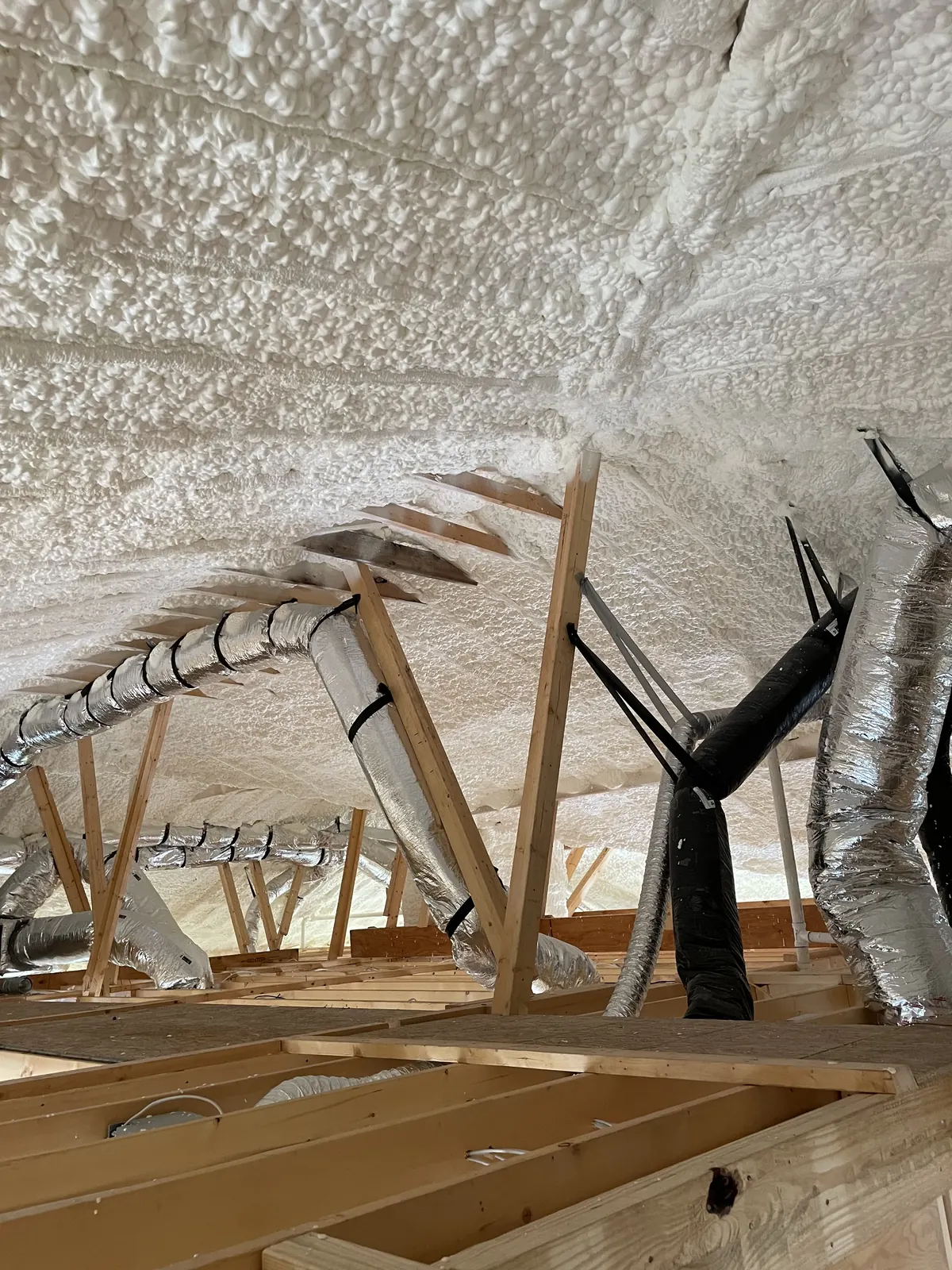
College Park lives next to one of the busiest airports in the world, and the noise is not background. It is a genuine quality-of-life issue, and it is one of the few cases where insulation is also an acoustic question. Spray foam helps, honestly and measurably, because it seals the thousands of small gaps that let airborne sound in through the roof deck and walls, and because the material itself absorbs sound energy. An attic sprayed at the roof deck is noticeably quieter on approach paths. We are careful to be straight about the limits: foam is not soundproofing, windows and doors remain the weakest path, and no insulation makes the planes disappear. But owners who have the work done for temperature regularly tell us the quiet is the part they did not expect.
Warehouses and light commercial buildings near the airport.
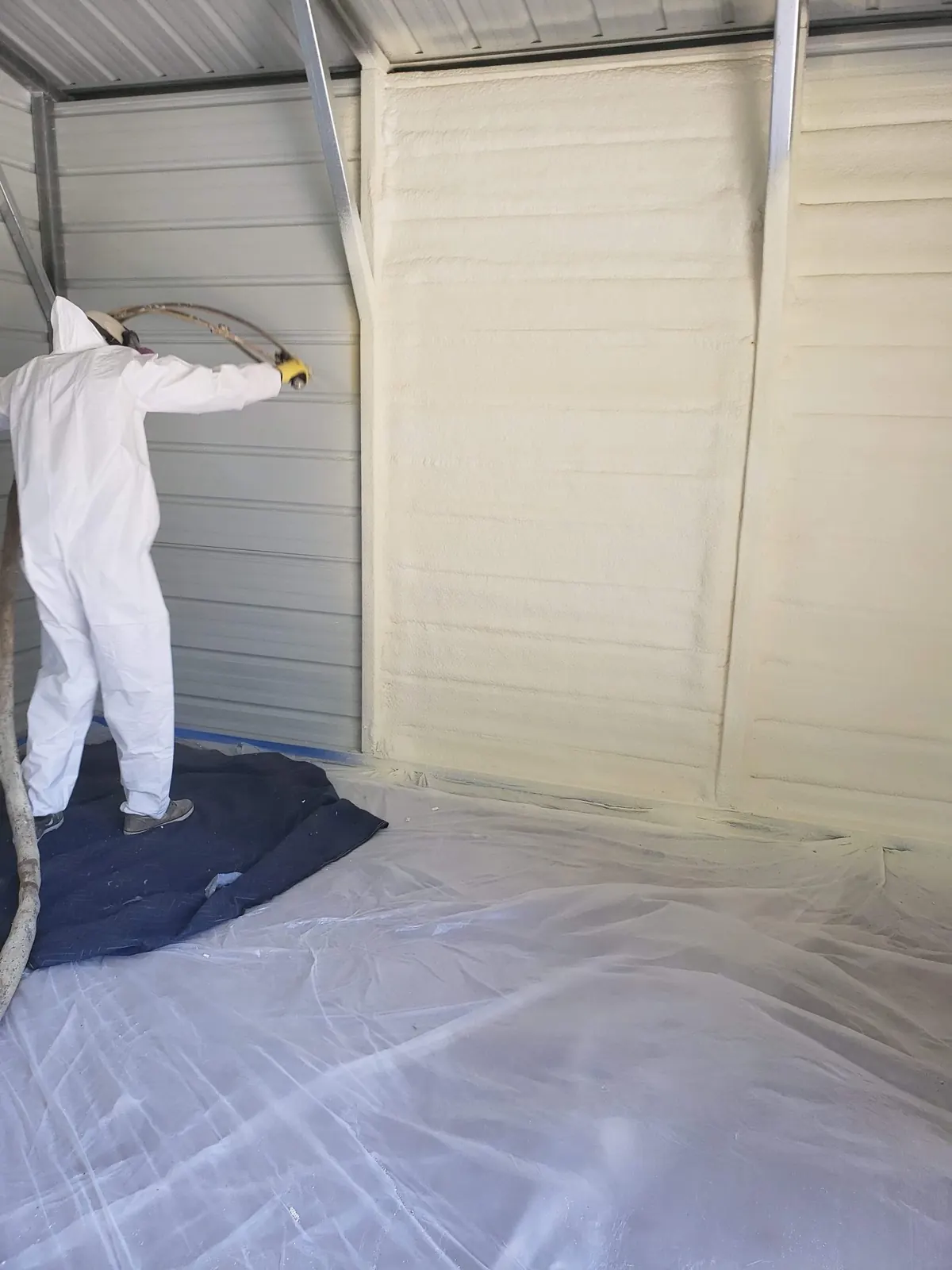
The same airport economy that brings the noise also fills College Park with warehouses, distribution space and light commercial buildings, and these come to us with their own complaints. Metal roof decks that radiate heat into the space below all summer. Condensation forming on the underside of the roof and dripping onto stored goods. Conditioned office space carved out of an unconditioned shell that was never designed for it. Foam answers these well, sprayed directly to the deck and walls, because it insulates and air-seals in one pass over large irregular surfaces. The scope for a commercial building is written the same way as a house: surfaces included, preparation, exclusions, and the sequence around your operations.
On a commercial building, the walls are their own decision.
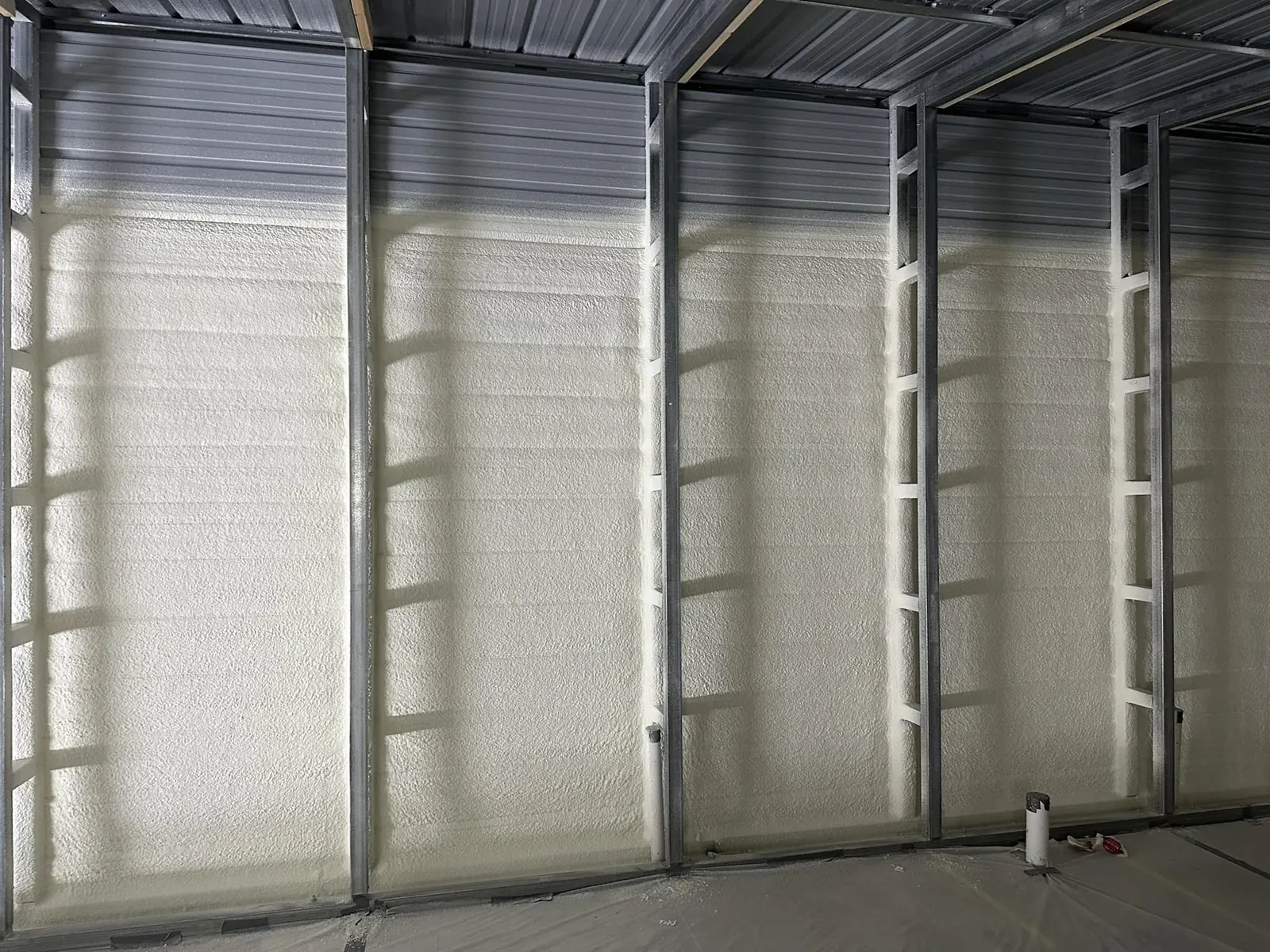
The roof deck is usually the clear answer in a metal building: spray it, and the radiant heat and the condensation both calm down. The walls take more judgment. Block walls hold temperature on their own, and whether they get sprayed depends on how the space is used, not on what looks tidy. When a conditioned office is carved out of an unconditioned warehouse, the boundary that matters is often the office's own walls and ceiling, not the whole shell, and treating just that box is frequently the right scope. We quote what the building's use actually calls for, and we write down which surfaces we left alone and why, so the scope matches the way the building earns its keep.
What we settle before we quote a College Park house.
Where the boundary runs today, through every addition. Where it should run as one continuous line. What condition the crawlspace is in, and whether moisture there needs an answer before insulation does. Whether the roof deck or the attic floor is the right surface. And if sound is part of why you called, which surfaces matter most for it. All of it goes in the written scope, with the exclusions named, so you know exactly what you are buying before we start.
Start with the draft, the smell or the noise.
Tell us what the house is doing and we will get under it and over it before we quote a thing. The crew that looks at your house is the crew responsible for the work. Call 770-294-2013 and we will take it from there.
Book a free estimate in College Park.
Tell us where the property is, which area is giving you trouble and what you are noticing. We will look at the building before we recommend anything.
- 01We look at the property
The work area, what is already there, the access and anything visibly wrong.
- 02We match the system to the building
Open cell, closed cell, or removal first, based on the assembly and how you use it.
- 03You get a scope you can read
Preparation, surfaces included, removals, exclusions and anything another trade owns.
Spray foam FAQs
Answers to the things College Park property owners usually want settled first.
Will spray foam help with the airplane noise?
Honestly, yes, within limits. Foam seals the gaps that let airborne sound in through the roof and walls, and the material itself absorbs sound energy, so an attic sprayed at the roof deck is noticeably quieter. It is not soundproofing, and windows and doors remain the weakest path. But owners who call about temperature regularly tell us the quiet is the part they did not expect.
Our bungalow has been added onto more than once. Where does the insulation even go?
That is the right question, and it is why we look before we quote. Stacked additions usually leave the thermal boundary wandering through the house in pieces. We trace it through the crawlspace and attic, decide where it should run as one continuous line, and quote that. Spraying without tracing it first just adds material to a confused house.
The crawlspace smells musty after it rains. Is that an insulation problem?
Usually it is the same problem. A vented crawlspace under a raised College Park bungalow pulls in humid air all summer, and that air rises into the house through a century of floor penetrations. Sealing and insulating the crawlspace at its perimeter, with a ground vapor layer, typically changes it. Standing water or drainage issues get answered first, and we will tell you if that is what you have.
Should insulation wait until our renovation is further along?
Yes, if trades are still moving wires and pipes. Foam cures permanently around whatever it touches, so mechanical changes come first and insulation follows, before the finishes close everything in. The upside is that an opened-up bungalow is the easiest version of this job. Tell us where the project stands and we will tell you whether it is time yet.
Do you work on warehouses and light commercial buildings in College Park?
Yes. Metal roof decks, condensation on the underside of roofs, and conditioned offices inside unconditioned shells are regular work for us in this area. The scope is written the same way as a residential job, with surfaces, preparation and exclusions named, and the work sequenced around your operations.
What does spray foam insulation cost in College Park?
It moves with the surfaces involved, how many additions have to be brought to one boundary, the condition of the crawlspace, which foam the assembly calls for, and the access. An older house with three additions prices differently than a simple rectangle. We do not publish a vague rate. The estimate is free and specific to your building.
Start with the part of the property that needs attention.
Each guide covers what we inspect, how the material gets chosen and the questions worth asking any contractor.
Get a spray foam estimate in College Park.
Family owned, straight answers, and we will tell you if foam is the wrong call for your building.