
Spray Foam Insulation in Roswell, GA
The right answer for a Roswell house depends on which Roswell house you own. A pre-war cottage in the historic core and a 1990s two-story in the newer subdivisions need opposite decisions about where the insulation goes.
Free Insulation Estimate
Family ownedOperating since 2010
Spray foam specialistsNot a general insulation reseller
Serving RoswellNorth Georgia
Lawrenceville based1891 Prospect Church Road
Most Roswell calls do not start with insulation. They start with a back bedroom that never cools down, a hallway that smells faintly musty every July, or floors that stay cold from November through March. The house is telling you where to look. Our job is to read it correctly, because Roswell houses do not all fail the same way, and the wrong answer installed well is still the wrong answer.
Roswell has two housing stocks, and they want opposite answers.
In the historic core and the older streets around it, the houses are pre-war. Lots are small, porches are deep, and most of these homes sit over vented crawlspaces. That design made sense when moving air under the floor was the only moisture plan anyone had. In a modern Georgia summer it works against you. Warm humid air moves through the vents all season and condenses on whatever is cooler under the house, including the floor system itself. The rooms above end up served by equipment that is fighting the crawlspace the entire time it runs. In these houses the thermal boundary usually belongs at the crawlspace perimeter, sealed and insulated, with the ground covered and the vents closed. The floor above stops being the boundary, and the rooms above stop paying for the weather underneath them.
Another part of Roswell is a completely different building. The 1980s and 1990s subdivisions are full of large two-story houses with floored attics, and those attic floors are not empty. They carry stored furniture, holiday bins, outgrown clothes and everything else a family keeps. The standard advice to add depth at the attic floor stops working here, because you cannot bury the decking without giving up the storage, and the storage is half the reason the attic exists. These houses usually want the boundary at the roof deck instead. Spray the underside of the roof, bring the attic inside the conditioned space, and the storage stays exactly where it is. Same city, same climate, opposite answer.
In the historic core, the crawlspace usually decides.
A vented crawlspace under an older Roswell house does three things at once, and none of them are good. It lets humid summer air condense on cool surfaces under the floor. It lets cold winter air sit directly beneath your feet, which is why the floor-level draft complaint is so common in the older core. And it gives every plumbing, wiring and duct penetration a straight path into the living space above. Sealing and insulating that crawlspace at its walls, with a proper ground vapor layer underneath, changes how the whole first floor behaves. Floors warm up. The musty smell that owners blame on the age of the house often turns out to be the crawlspace, and it often leaves with the vents.
The rim where the floor meets the foundation leaks in both eras.
The band joist is the short run of framing where the floor system lands on the foundation wall, and it wraps the whole perimeter of the house. It is only a few inches tall, but it was rarely sealed when the house was built, and it collects every gap where the sill, the rim and the subfloor meet. In the pre-war raised houses we reach it from the crawlspace. In the newer stock it often sits above a basement or behind a garage ceiling. Either way it is one of the leakiest lines in the building, and spraying it is a small part of the job that punches well above its size. When we scope a crawlspace or a garage ceiling, the rim is on the list by name, not assumed.
We look before we recommend anything under a house. Standing water, fallen old material, duct runs through the space and signs of long-term moisture all change the scope. A crawlspace that has been wet for years may need its water problem answered first, and foam is not a drainage plan. If that is what your house needs, we will say so and tell you what has to happen before insulation makes sense. Covering a problem with new material just hides the problem and makes it harder to find later.
In the subdivisions, the floored attic full of storage decides.
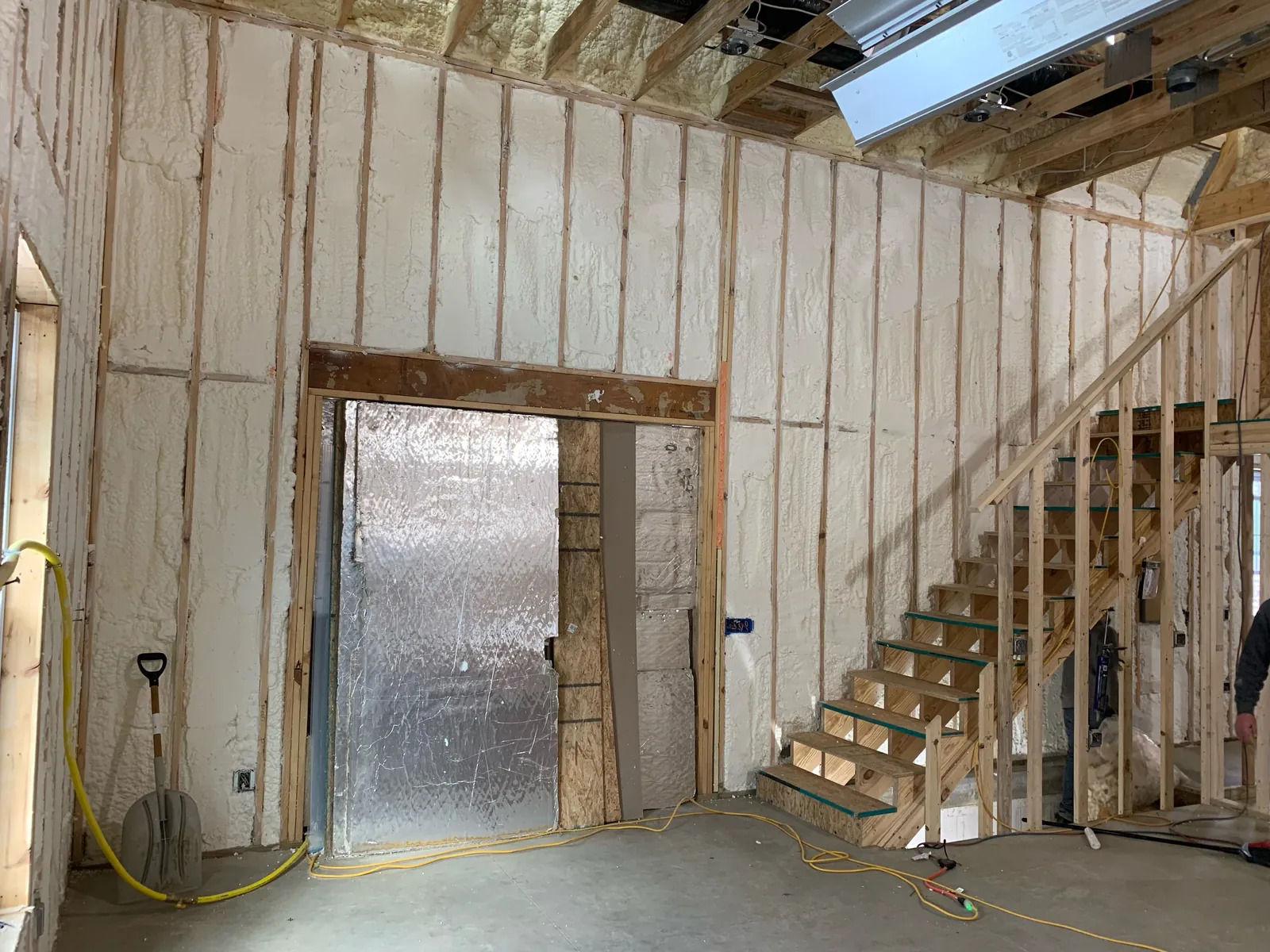
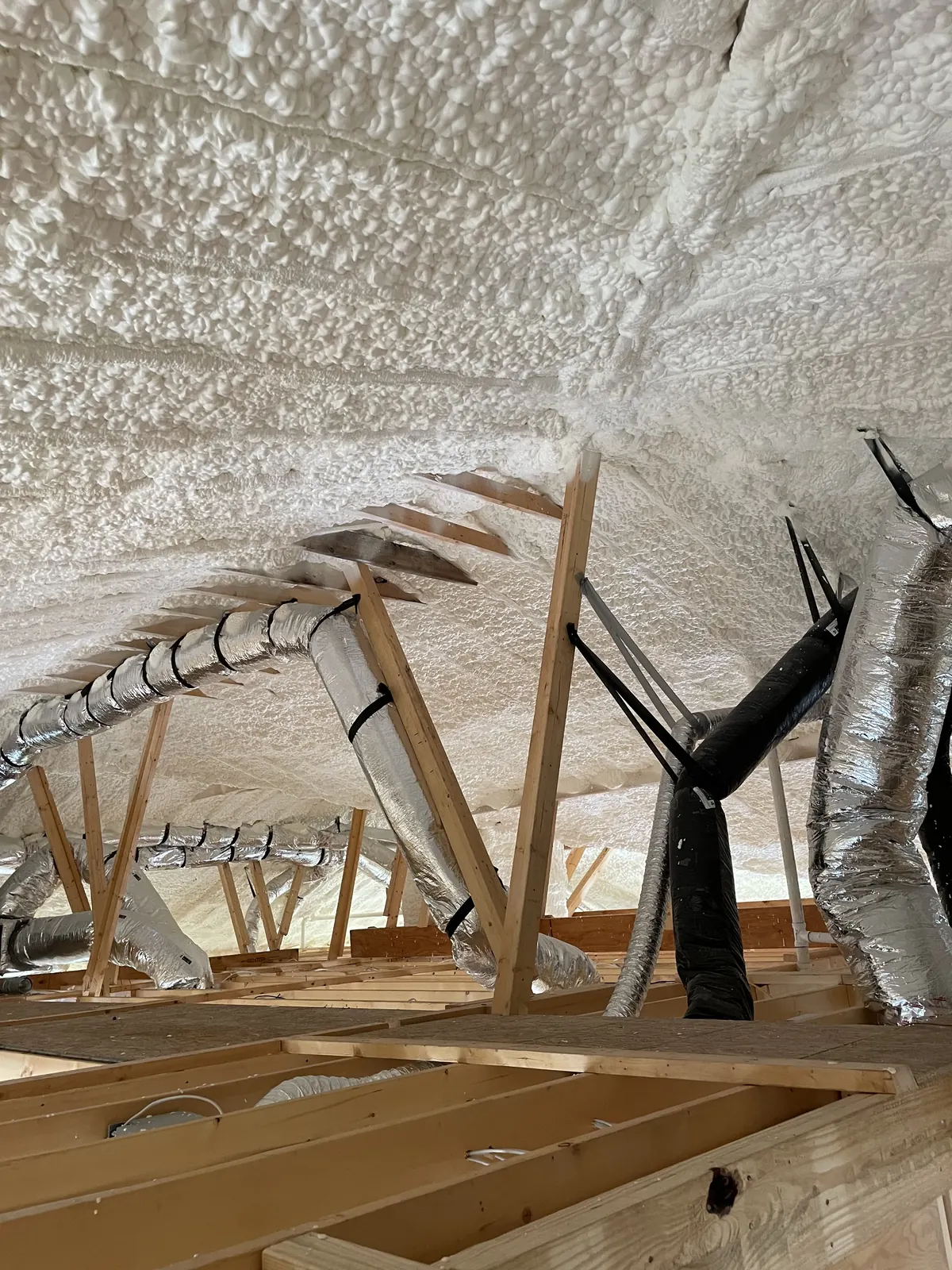
When the attic floor is decked and loaded, the decision runs the other way. Insulating at the floor would mean lifting or losing the decking, burying the ductwork that usually runs up there, and sealing around decades of added wiring, recessed lights and pull-down stairs. Spraying the roof deck avoids all of it. The attic comes inside the house. The storage deck stays usable. The ductwork and any air handler up there stop sitting in a space that runs hotter than the outdoors for months at a time, and the equipment stops paying that penalty every day it runs. Both approaches are normal and both are right in the correct situation. One Roswell house needs its crawlspace closed while the next one over needs its roof deck sprayed. The building decides, not a preference.
A loaded attic has to be emptied before floor work, and partly cleared for roof work.
If the decision lands at the roof deck, the decking and most of what sits on it can usually stay, but the crew needs a clear path from the hatch and clearance along the eaves where the spraying happens, so the outer rows of stored bins get pulled back toward the middle. If the decision lands at the attic floor, everything on the decking comes out first, because sections of the deck may need to be lifted to reach the spaces between joists. Either way the written scope tells you exactly what has to move and what can stay, so moving day does not surprise you. Fragile and heat-sensitive items come out regardless, because an attic gets hot during the work.
The Chattahoochee corridor changes the moisture math.
Houses along the river and its feeder creeks live in heavier humidity than the rest of the metro, and we see it in the work. Crawlspaces that never quite dry out between rains. Roof decks showing moisture staining on the north faces. Closets on the lower level that smell damp no matter how the house is kept. That humidity is the reason the old vented crawlspace approach fails hardest in this part of Roswell, and it is the reason we think about how an assembly will dry before we close it up. Where the moisture goes after the work matters as much as where the foam goes during it.
A bath fan that ends in the attic is a moisture feed.
A surprising number of Roswell houses have at least one bath fan that blows into the attic instead of out of it. Every shower puts a load of warm wet air straight into the space, and this close to the river the attic never fully dries it out. The result shows up as darkened roof deck above the bathrooms and a musty note in the upstairs air. Where the fans terminate gets checked as part of the boundary decision, because sealing an attic while leaving fans dumping into it just concentrates the moisture. Rerouting a fan through the roof or a gable is usually another trade's work, and we name it as such in the scope rather than quietly spraying around it.
The season the symptom shows up in tells us where to look.
Pay attention to when the house misbehaves, because the timing is diagnostic. Rooms that run hot only on summer afternoons point upward, at the attic and the roof. Floors and ankle-height drafts that bother you from November through March point downward, at the crawlspace and the rim. A smell that arrives after a week of rain points at the ground under the house. A room that is uncomfortable all year, in every weather, usually has an air path problem rather than a seasonal one, and that is a different conversation. Telling us the when makes the first visit shorter and the scope sharper.
You can check four things yourself before you call.
None of this replaces getting in the attic, but it sharpens the estimate. On a hot afternoon, open the attic hatch and note whether the ductwork or an air handler is up there, and whether the floor is decked and loaded. Step outside, find the crawlspace vents, and look through one for standing water or fallen material on the ground. Note which rooms misbehave and in which season. Check whether any bath fan leaves a stain on the ceiling around its grille. Bring that list to the estimate and we start from facts instead of guesses.
From a look under the house to a scope you can read.
- 01 We get in the crawlspace and the attic. Not a doorway glance. We look at the existing material, the framing, the moisture history and every penetration that crosses the boundary.
- 02 We decide where the boundary belongs. Roof deck or attic floor, crawlspace walls or floor system, based on what is in the space and how you actually use it.
- 03 You get the scope in writing. Surfaces included, preparation, removal if it is needed, exclusions, and anything another trade owns.
A quote given without standing in your attic or crawling under your floor is a guess. The crew that looks at the house is the crew responsible for the work, and we stand behind what we install. Call 770-294-2013 and tell us which room is giving you trouble. We will take it from there.
Book a free estimate in Roswell.
Tell us where the property is, which area is giving you trouble and what you are noticing. We will look at the building before we recommend anything.
- 01We look at the property
The work area, what is already there, the access and anything visibly wrong.
- 02We match the system to the building
Open cell, closed cell, or removal first, based on the assembly and how you use it.
- 03You get a scope you can read
Preparation, surfaces included, removals, exclusions and anything another trade owns.
Spray foam FAQs
Answers to the things Roswell property owners usually want settled first.
Should a Roswell attic be insulated at the roof deck or the attic floor?
It depends on what is up there. If the attic is floored and used for storage, or the ductwork and air handler live up there, the roof deck usually makes more sense, because the storage stays and the equipment stops baking. If the attic is empty and stays empty, sealing at the floor can be the better value. We settle it in the attic, not on the phone.
Our older Roswell home has a damp crawlspace. Is that an insulation problem?
Often it is the same problem. A vented crawlspace along the river corridor pulls in humid air all summer, and that moisture reaches the floor system. Sealing and insulating the crawlspace at its perimeter, with a ground vapor layer, usually changes it. If there is standing water or a drainage issue, that gets answered first, and we will tell you so.
Will we lose the storage space in our floored attic?
Not if the work is done at the roof deck. The decking stays, the storage stays, and the attic simply comes inside the conditioned space. That is usually why subdivision houses with loaded attics get recommended the roof deck in the first place.
Can the rim joist be sealed without doing the whole crawlspace?
The rim is usually sprayed as part of a crawlspace or basement scope, because it sits on the same boundary and the crew is already there. On its own it is a small area, and we will tell you honestly whether a rim-only visit makes sense for your house or whether it belongs in a larger scope. That call gets made after a look at the space.
What does spray foam insulation cost in Roswell?
It moves with the surfaces involved, whether we are at a roof deck, an attic floor or a crawlspace, which foam the assembly calls for, how much preparation or removal is needed, and how hard the access is. We do not quote a vague rate, because a number that vague is not useful to you. The estimate is free and specific to your house.
How long does the work take?
Most residential jobs are a one-day job once preparation is done. A crawlspace with heavy cleanup, or a removal, adds time. We put the expected duration in the written scope so you know before we start, and we tell you then how long to stay out of the work area.
Start with the part of the property that needs attention.
Each guide covers what we inspect, how the material gets chosen and the questions worth asking any contractor.
Get a spray foam estimate in Roswell.
Family owned, straight answers, and we will tell you if foam is the wrong call for your building.